
What is Magnesium Ribbon? (Definition and Properties)
Magnesium ribbon is a strip of metallic magnesium rolled into a thin, flexible form so that it can be easily cut and burnt in the laboratory. Magnesium itself is a reactive metal of Group 2 (alkaline earth metals) with atomic number 12 and symbol \(\mathrm{Mg}\).
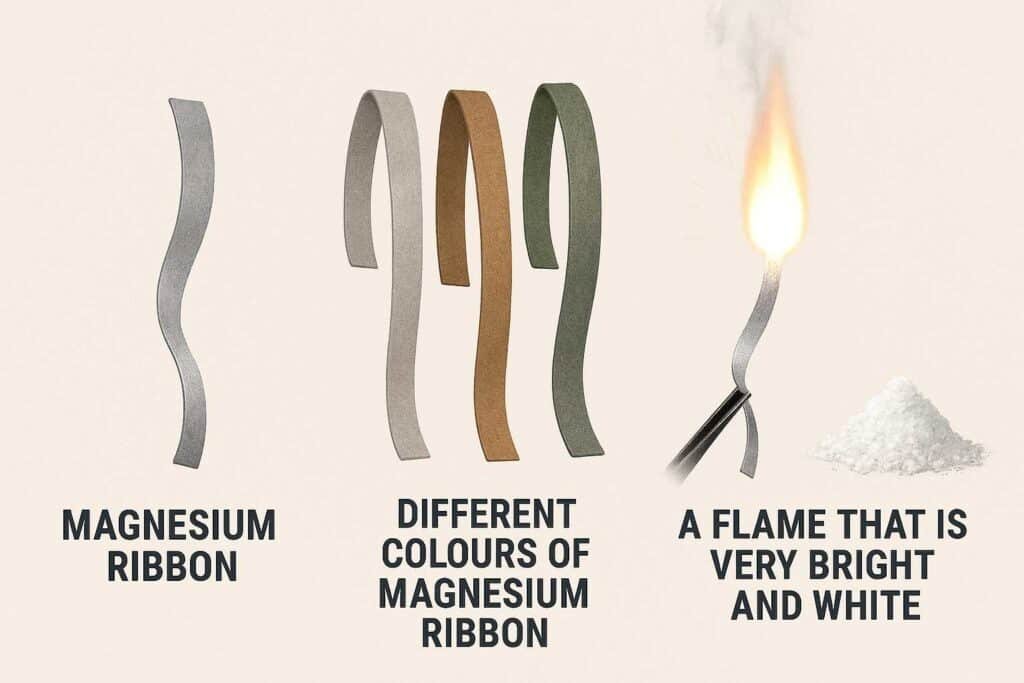
- Colour of Magnesium Ribbon: When cleaned, the ribbon looks shiny and silvery white.
- Physical Properties: It is light in weight, soft enough to be bent, and conducts heat and electricity like other metals.
Because of its reactive nature and bright flame, magnesium ribbon is ideal for demonstration experiments in school labs and for ignition or flash effects in fireworks.
Colour and Appearance Before and After Burning
Before burning, magnesium ribbon is silvery white in colour if it has been properly rubbed with sandpaper and is free from the oxide layer. If it is not cleaned, a dull white coating is seen on its surface; this is magnesium oxide formed due to slow reaction with oxygen and moisture from air.
When magnesium ribbon burns in air, it produces:
- A flame that is very bright and white
- A white powdery ash of magnesium oxide \(\mathrm{MgO}\) that is basic in nature.
If moist red litmus paper is touched to the ash (after adding water), the litmus turns blue, confirming that magnesium oxide forms an alkaline solution (magnesium hydroxide) in water.
The Burning of Magnesium Ribbon in Air: Reaction & Observation
When magnesium ribbon is heated strongly in air or pure oxygen, it reacts with oxygen to form magnesium oxide.
Balanced Chemical Equation and Type of Reaction
The balanced chemical equation for the burning of magnesium ribbon in air is:
This reaction shows that two atoms of magnesium combine with one molecule of oxygen gas to form solid magnesium oxide.
- Type of Reaction: It is a combination reaction because magnesium and oxygen combine to form a single product, magnesium oxide.
- Exothermic or Endothermic: The reaction is exothermic; a large amount of heat and light energy is released, which is why the flame is so bright.
The key observation when burning magnesium ribbon in air is: “It burns with a bright white flame and leaves behind a white ash of magnesium oxide.”
The Class 10 Practical: Burning Magnesium Ribbon Experiment
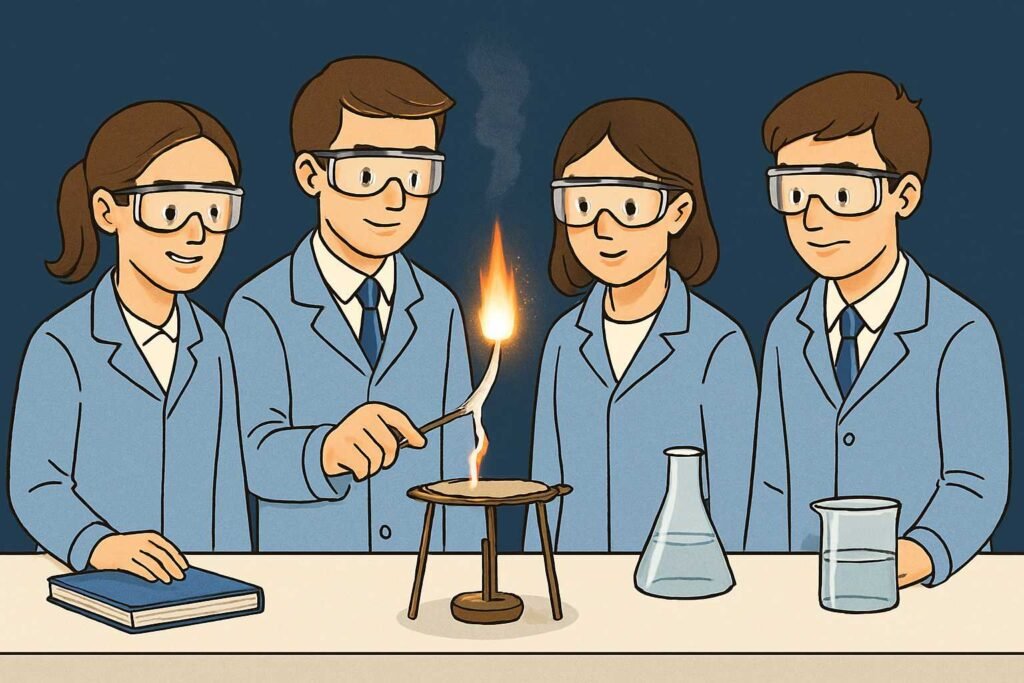
The “Burning of Magnesium Ribbon in Air” is a standard Class 10 Science practical. The aim is to study the burning of magnesium and identify the type of chemical change taking place.
Materials, Procedure, and Safety Points
Materials Needed: Magnesium ribbon, tongs, Bunsen burner/spirit lamp, watch glass, sandpaper, moist red/blue litmus paper.
Procedure (Simple Steps):
- Clean the magnesium ribbon with sandpaper until it becomes shiny and silvery.
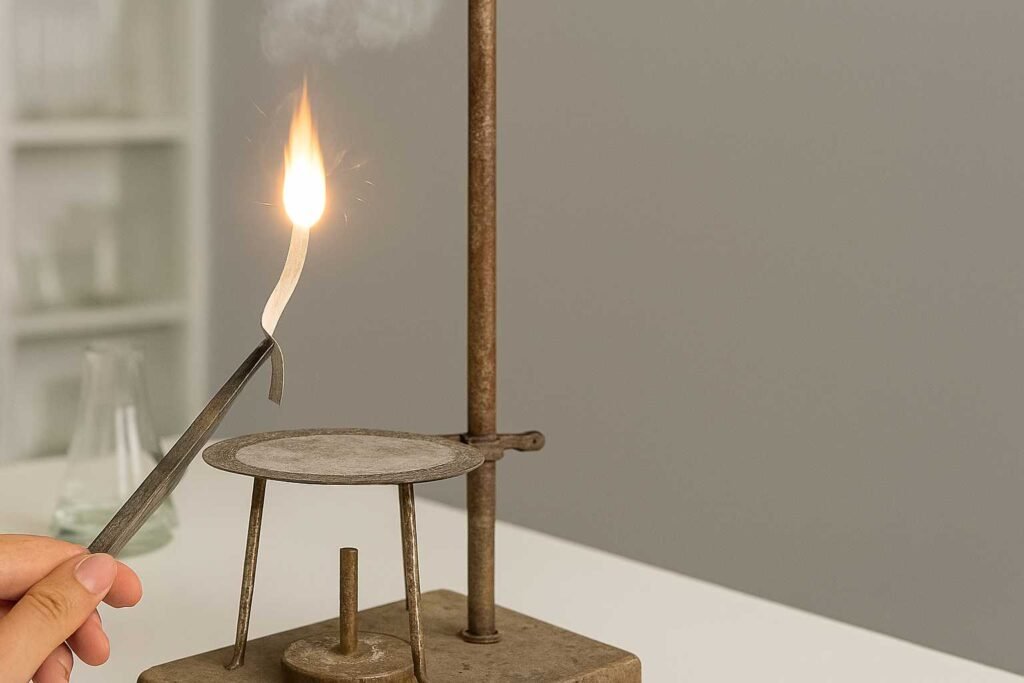
- Hold one end of the ribbon with tongs and bring the other end into the flame.
- Observe: It ignites after heating and burns with a dazzling white flame.
- Collect the white powder (Magnesium Oxide) on a watch glass.
- Test the ash with moist red litmus paper after adding water (red litmus turns blue $\to$ product is basic).
Important Safety Tips:
- Never look directly at the bright flame produced by burning magnesium ribbon; it can strain the eyes.
- Always hold the ribbon with tongs, as it becomes extremely hot.
Summary of Observations and Inference
- During Burning: Produces brilliant white light and high heat.
- After Burning: A white, powdery solid (Magnesium Oxide) is left on the watch glass.
The inference is that the burning of magnesium ribbon is an exothermic combination reaction, as heat and light are produced, and a single new substance is formed.
Uses Of Magnesium Ribbon And Magnesium Metal
Magnesium ribbon uses go beyond the school laboratory. In real life and industry, magnesium and its compounds have several applications.

- Demonstration and teaching: Burning of magnesium ribbon experiment is used in schools and colleges to teach combination reactions, exothermic reactions, and oxidation.
- Photography and fireworks: Earlier, magnesium ribbon and magnesium powder were used in flash photography and fireworks because of the intense white light produced on burning.
- Alloys and metals: Magnesium is used in light‑weight alloys for aircraft, automobiles, and sports equipment because it is strong yet lighter than many other metals.
- Chemical industry: Magnesium compounds like magnesium oxide and magnesium hydroxide are used in medicine (as antacids and laxatives), in construction materials, and as refractory linings.
Diagram And Safety Points
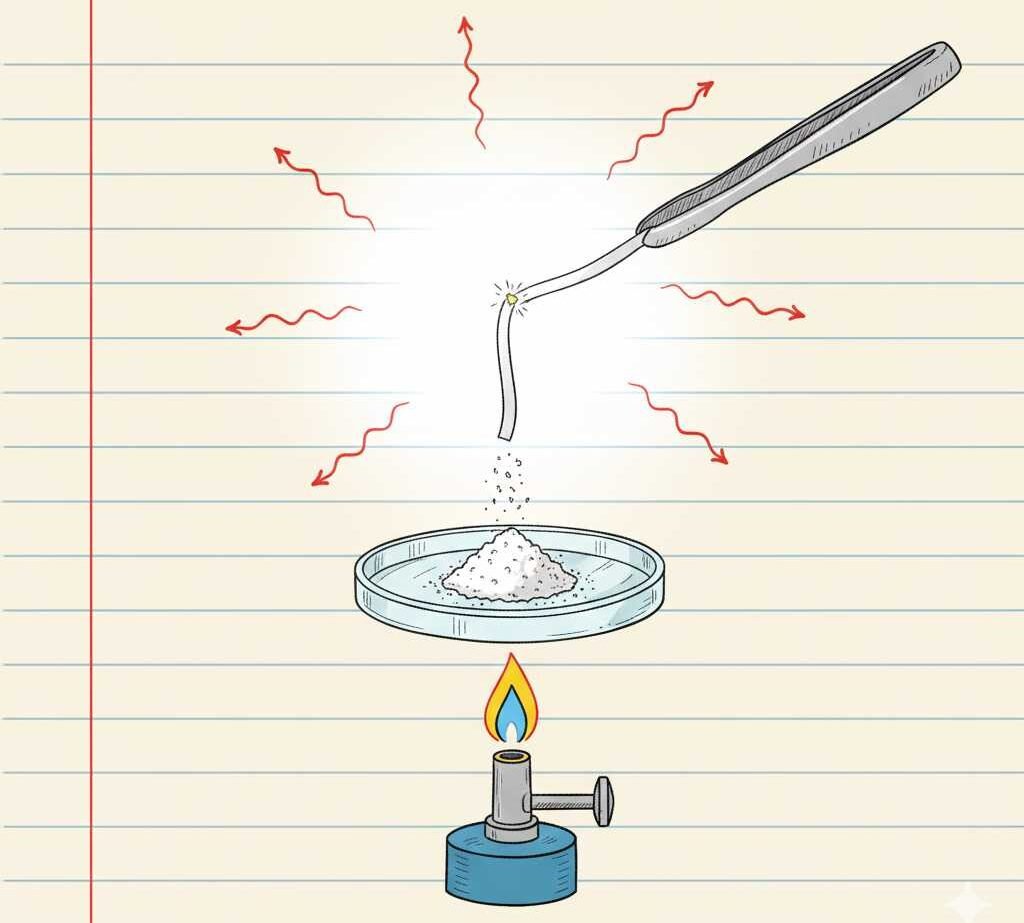
A simple burning of magnesium ribbon diagram for notebooks shows:
- A Bunsen burner or spirit lamp at the bottom.
- A strip of magnesium ribbon held with tongs in the flame.
- Above the flame, bright light and arrows showing heat being released.
- A watch glass collecting the white ash of magnesium oxide.
While drawing, students should label “magnesium ribbon”, “burning in air”, “white light”, and “magnesium oxide ash” to make the diagram exam‑ready.
Important safety tips during the experiment:
- Never look directly at the bright flame produced by burning magnesium ribbon; it can strain the eyes.
- Always hold the ribbon with tongs, not with bare hands, because it becomes extremely hot.
- Perform the burning of magnesium ribbon in air experiment under teacher supervision and away from flammable materials.
- Do not touch the white ash immediately; let it cool before testing it with water and litmus.