Introduction
India’s journey into the cosmos has been extraordinary. From groundbreaking rocket missions to advanced satellite launches, the Indian Space Research Organisation (ISRO) continues to lead the nation forward. Alongside ISRO, a new generation of private aerospace companies in India is rising quickly. These emerging start-ups combine engineering, innovation, and advanced technologies like 3D print manufacturing to build launch vehicles, propulsion systems, and orbit-ready satellites.
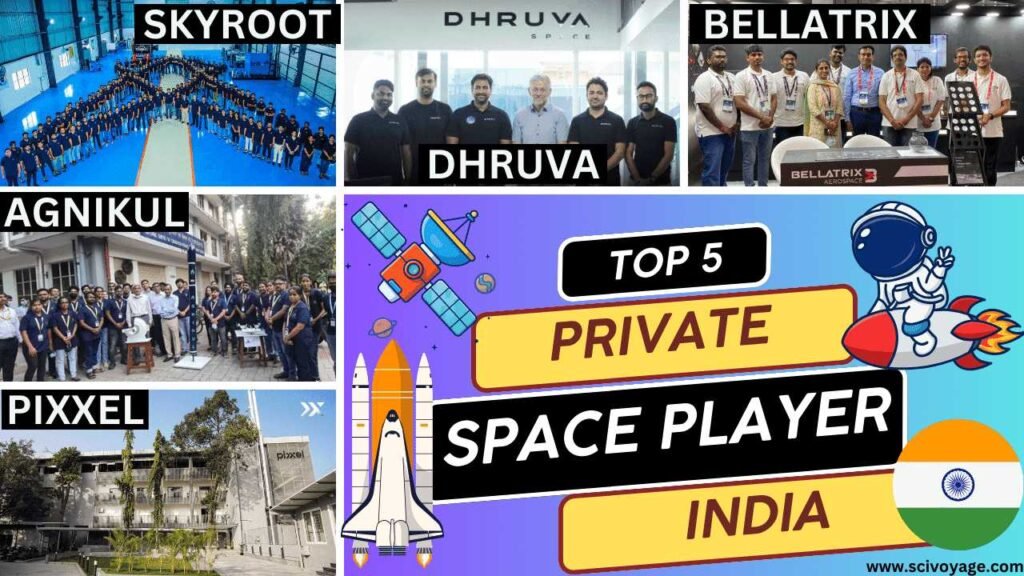
Today, we explore the top 5 private space companies in India, their achievements, and how each company is shaping India’s growing private space ecosystem.
Overview of the Top 5 Private Space Companies in India
1. Skyroot Aerospace
Hyderabad-based Skyroot Aerospace, founded in 2018, is one of the most innovative private aerospace companies in India.

Mission
Skyroot aims to develop cost-effective rocket launch vehicles for small satellite missions.
Partnership with ISRO
In 2021, Skyroot became the first start-up to collaborate with ISRO, gaining access to its high-end facilities for testing and subsystem development.
Innovation
Their well-known Vikram-series rockets use advanced 3D print propulsion technology and deliver payloads efficiently into orbit.
Also read – ISRO Space Centers in India
2. Bellatrix Aerospace
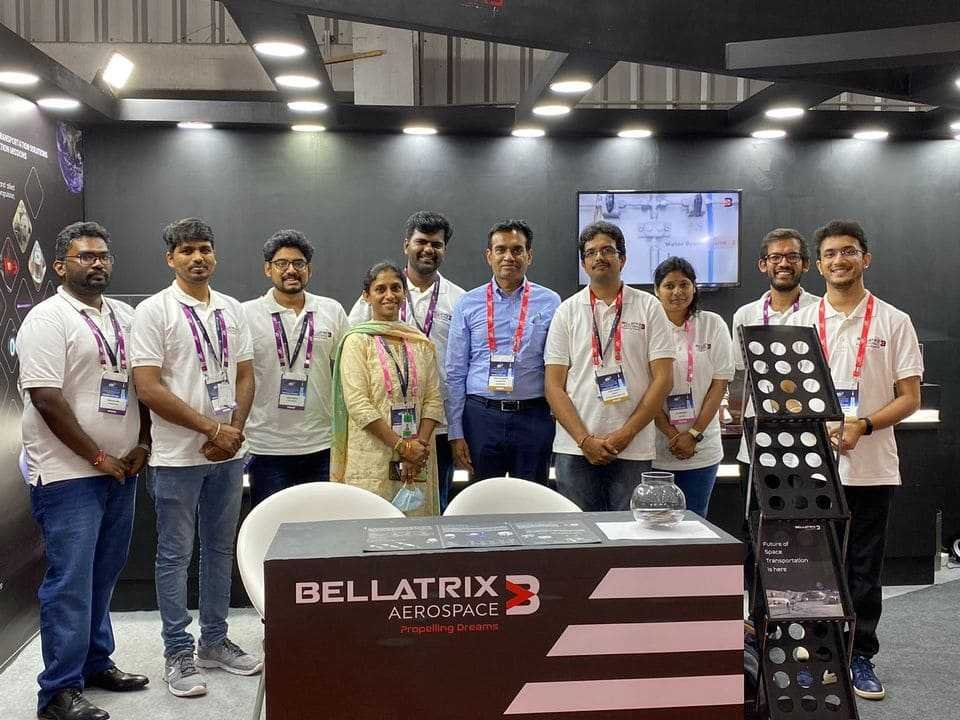
Bellatrix Aerospace, established in 2017, is known for its futuristic propulsion engineering and eco-friendly space systems.
Cutting-Edge Technology
Bellatrix develops green propellants, electric propulsion, and next-generation small launch vehicles.
Innovation
Their work focuses heavily on sustainable satellite propulsion and space mobility systems.
Future Vision
Bellatrix aims to transform satellite propulsion while supporting India’s push toward a cleaner aerospace ecosystem.
Also read – Top 15 Space Agencies in the World for 2024
3. Dhruva Space
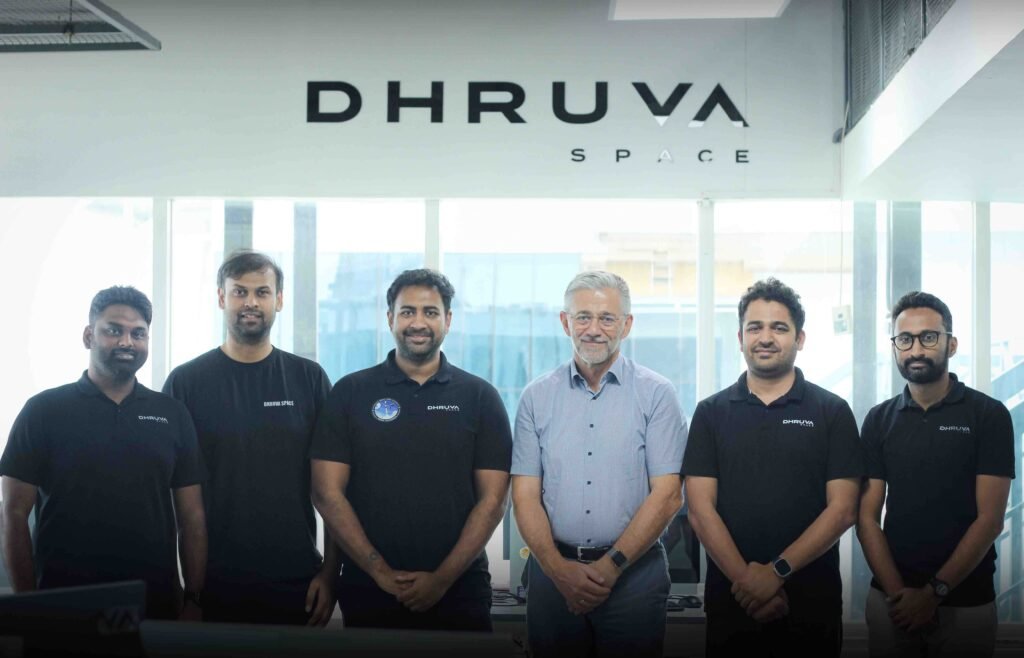
Dhruva Space, another strong player in the private sector, has made a name for itself by developing nanosatellites and small satellite systems.
Expertise
Dhruva focuses on building reliable nanosatellites for multiple applications including defense, research, and commercial use.
Collaborations
They frequently collaborate with universities, global partners, and ISRO to make satellite access more affordable.
Vision
Dhruva aims to democratize space and lower the overall price of entry for organizations looking to explore orbit.
4. Agnikul Cosmos
Agnikul Cosmos is one of India’s most futuristic launch start-ups.
Small Satellite Launch Vehicles
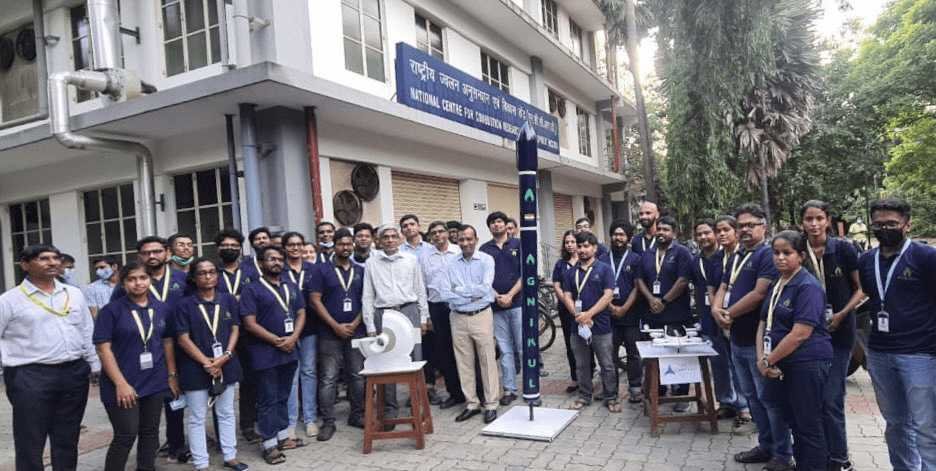
Based in Chennai, Agnikul is designing small rocket launch vehicles customized for different payload requirements.
The Agnibaan Rocket
Their flagship Agnibaan rocket is a fully 3D-printed semi-cryogenic launch vehicle capable of placing payloads directly into orbit.
Vision
Agnikul aims to make launch services flexible and accessible for both small and large companies.
5. Pixxel
Pixxel is building one of the world’s most advanced Earth-observation satellite constellations.

Innovation
Their high-resolution satellites help monitor agriculture, climate, natural disasters, and environmental changes.
Applications
Pixxel’s real-time satellite data is used extensively in farming, weather prediction, and commercial analytics, making them a global explorer in Earth observation technologies.

Also read – List of Moon Landed Countries
Conclusion
The private aerospace ecosystem in India is booming. These companies are scaling rapidly, using 3D print engines, modular rockets, nanosatellites, and advanced propulsion systems. Their innovations are pushing India’s space sector beyond boundaries and making Indian private companies globally competitive.
As we continue our journey into the cosmos, the contributions of Skyroot, Bellatrix, Dhruva, Agnikul, and Pixxel stand as a testament to India’s engineering excellence. These companies are paving the way for a future where access to orbit becomes easier and more affordable for all.
India’s private space sector is not only shaping the future of rockets and satellites but also inspiring the next generation of space explorers.
Frequently Asked Questions (FAQs)
This FAQ section is designed to provide quick and clear answers to the most common inquiries we receive. We encourage you to click on a question to find the information you need. If you can’t find an answer here, please don’t hesitate to visit our Contact Us page for further assistance.
How Many Rockets Launched in India?
India has conducted over 100 orbital launches from its centers, primarily by ISRO from Satish Dhawan Space Centre, as of November 2025.
ISRO’s recent missions include 101 launches listed, with PSLV-C61 as the latest in May 2025.
How Many Rockets Launched by India?
ISRO has executed around 100 successful orbital rocket launches, including PSLV (62+), GSLV (18+), and LVM3 (8+), plus SSLV developments.
India has also launched 433 foreign satellites via these rockets by 2025.
Is There Any Private Space Company in India?
Yes, India has over 200 private space companies and startups active in the sector as of 2025.
Key players include Skyroot Aerospace, Bellatrix Aerospace, Dhruva Space, Agnikul Cosmos, and Pixxel.
What are private space companies participation in India ?
Private firms participate in manufacturing components, satellite launches, and testing via partnerships with ISRO, Antrix, and IN-SPACe.
Over 500 companies support ISRO in areas like propulsion and ground systems; startups access ISRO facilities and a Rs. 1,000 crore VC fund
Who is present ISRO Chairman?
Dr. V. Narayanan serves as the current Chairman of ISRO and Secretary of the Department of Space, appointed on January 14, 2025.
A distinguished cryogenic engineer and former Director of Liquid Propulsion Systems Centre (LPSC), he oversees key projects like Gaganyaan.
He succeeded S. Somanath after nearly four decades of contributions to rocket propulsion systems.
Having any queries? – Do reach us at info@scivoyage.com
2 thoughts on “Top 5 Private Space Companies in India”
There’s so much noise online, but your blog always manages to cut through with authenticity and intelligence.
It’s amazing how your writing feels both professional and personal at the same time. That balance makes a real difference to readers.